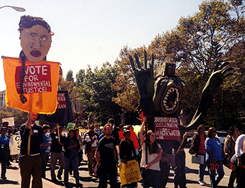
3. Environmental justice refers to any environmental policy, practice or action that negatively impacts communities, groups or individuals based on race or ethnicity.
False- Environmental Racism, not EJ, refers to environmental policy, practice or action that negatively impacts communities, groups or individuals based on race or ethnicity. Environmental Racism creates the need for Environmental Justice.
Polluting facilities, such as incinerators, oil refineries, landfills and diesel bus stations sited on the boundaries of communities; and plants, such as electronic assembly plants, that expose workers to carcinogenic solvents daily without educating or protecting workers against hazardous materials are all examples of environmental racism.
Underlying causes of the EJ crisis include: Institutionalized Racism, the commodification of land, water, energy and air, unresponsive and unaccountable government policies and regulation, and a lack of resources and power in affected communities.
Go to question #4
|